
There are restaurants you visit because the food is supposed to be exceptional. And then there are restaurants you visit because the building, the stories and the experience are every bit as important as what arrives on your plate.
In Boston, few places fit that description better than the Union Oyster House.
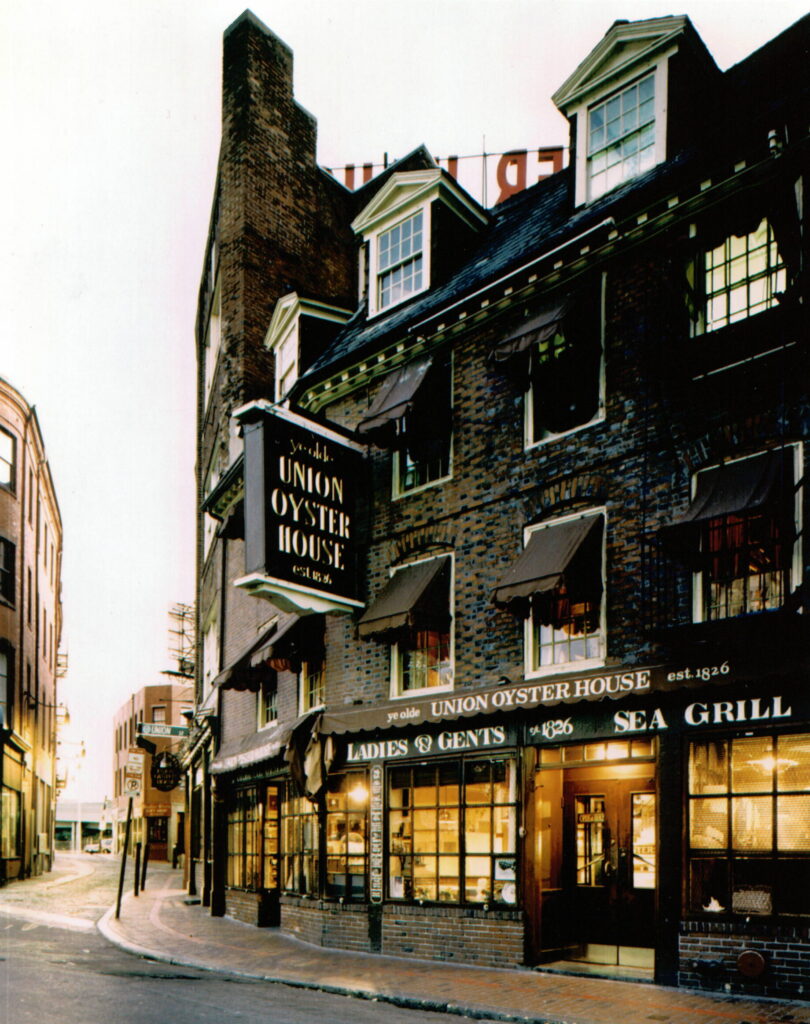
Located on Union Street in Boston’s historic Blackstone Block, just steps from the Freedom Trail and a short walk from Faneuil Hall, the Union Oyster House has been serving diners since 1826. It is widely recognized as America’s oldest continuously operating restaurant—and walking through its doors feels like stepping into another era.
The restaurant celebrated its 200th anniversary in 2026, making a visit especially timely.
A Restaurant With Two Centuries of Stories
The Union Oyster House’s story actually begins long before it became a restaurant.
The building itself dates to the 18th century and was already standing when Boston was still a young colonial city. In the years before the restaurant opened, the building housed businesses, residents and some remarkably consequential occupants.
During the Revolutionary era, printer Isaiah Thomas operated The Massachusetts Spy from the building from 1771 to 1775. The newspaper became an important source of information during the years surrounding the American Revolution.
The building also served as a headquarters for Ebenezer Hancock, the first paymaster of the Continental Army, and in the 1790s the future King Louis Philippe I of France lived there while in exile and taught French to members of Boston’s upper class.
Then came 1826.
That year, the building’s newest owners transformed it into an oyster house, beginning the restaurant’s remarkably long run. Two centuries later, diners are still sitting in essentially the same historic surroundings.
The Famous Oyster Bar
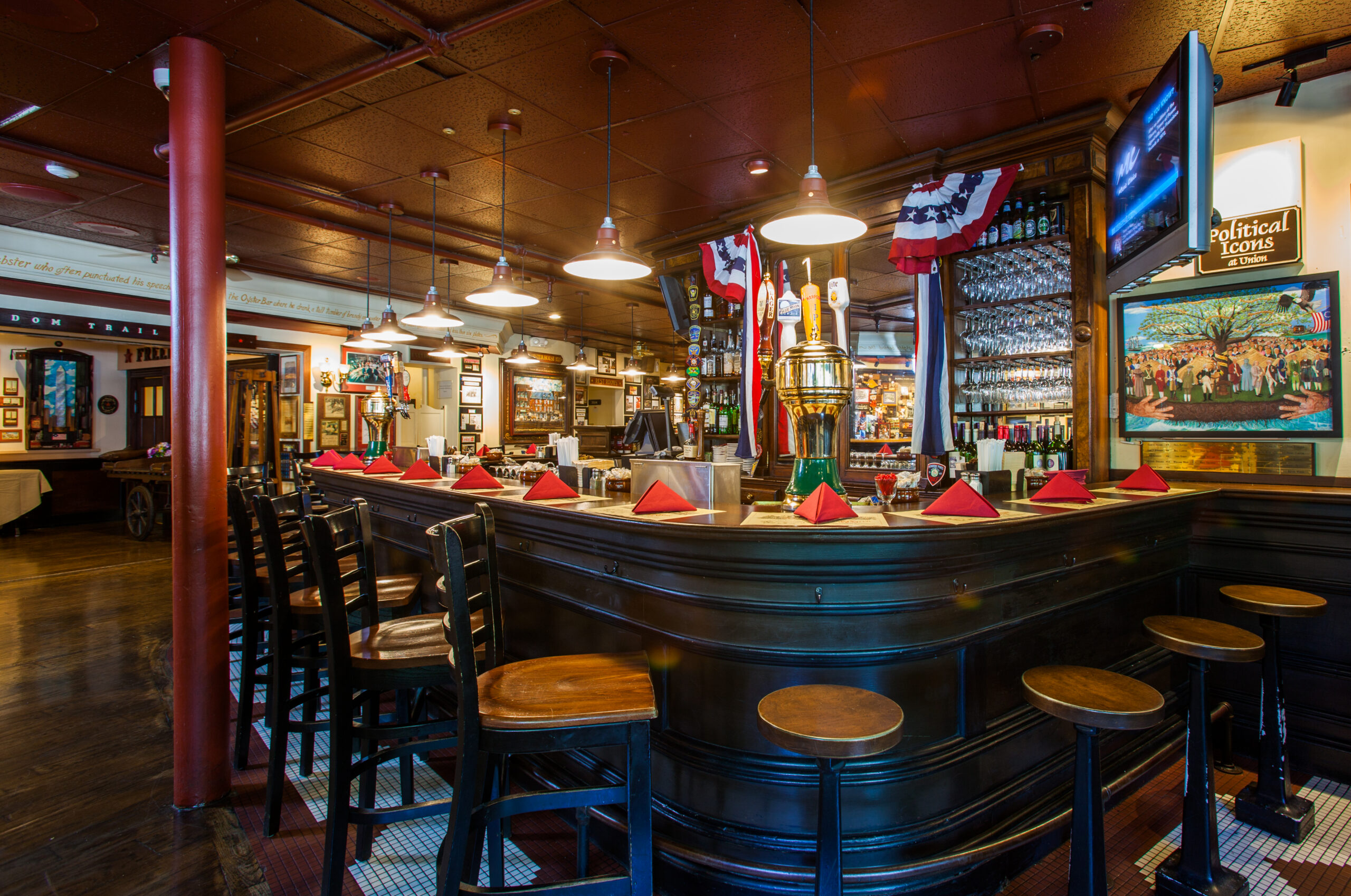
The heart of the restaurant is its iconic semicircular oyster bar.
Oysters were enormously popular in 19th-century America, and oyster houses were once common throughout the country. At the Union Oyster House, that tradition has never disappeared.
The restaurant’s historic oyster bar became a gathering place for some of Boston’s most prominent figures. Daniel Webster, the famed Massachusetts statesman and orator, was a regular customer. The restaurant’s history records that Webster was known to enjoy oysters accompanied by a tall glass of brandy and water.
Today, visitors can still sit at the bar and order oysters prepared in several different ways, including raw on the half shell, grilled, fried and Oysters Rockefeller.
For anyone interested in experiencing the restaurant’s history firsthand, the oyster bar is arguably the place to start.
Don’t Skip the Clam Chowder
You can’t really visit a classic Boston seafood institution without considering clam chowder.
The Union Oyster House has been serving its version of the New England staple for generations, and the restaurant says its chowder tradition dates to 1834. According to The Boston Globe, the basic recipe has changed remarkably little over the years, built around clams, potatoes, celery, onions and salt pork.
Clam chowder is among the restaurant’s most popular dishes, and the Union Oyster House reportedly goes through thousands of gallons of it each year.
Other classic choices include lobster, fried clams, oysters, scallops and a variety of traditional New England seafood dishes.
In other words, this isn’t the place to go looking for a radically reinvented take on seafood. The appeal is much more straightforward: classic Boston seafood in a setting that is nearly impossible to replicate.
The Kennedy Connection
The Union Oyster House has attracted generations of famous visitors, including several U.S. presidents.
But perhaps its most famous political connection is to the Kennedy family.
John F. Kennedy was a regular visitor to the restaurant and reportedly favored a private upstairs booth. That booth is now known as the Kennedy Booth, with a plaque commemorating the former president.
The restaurant’s long list of notable patrons also includes Franklin D. Roosevelt, Bill Clinton and numerous Massachusetts politicians, athletes and other celebrities.
It’s one of those details that makes exploring the restaurant feel a little like exploring Boston itself: American history is woven into the walls.
A National Historic Landmark
The Union Oyster House isn’t simply an old restaurant with a good marketing story.
In 2003, the building and restaurant received designation as a National Historic Landmark, recognizing both its architectural significance and its extraordinary history as a continuously operating restaurant.
The National Park Service designation notes the building’s connection to Isaiah Thomas, Louis Philippe, Daniel Webster and other notable figures, as well as its distinction as the country’s oldest continuously operating restaurant and oyster bar.
That makes the Union Oyster House an especially interesting stop for travelers who enjoy places where food and history overlap.
What Makes It Worth Visiting?
Boston has no shortage of excellent restaurants. So why make a point of visiting a restaurant that has been welcoming diners for 200 years?
Because the Union Oyster House offers something that a modern restaurant simply can’t manufacture.
You can walk the Freedom Trail, wander through Boston’s historic streets, and then sit down for oysters or a bowl of chowder in a building that was already standing before the United States became the country we know today.
The experience isn’t just about dinner.
It’s about eating in a place where generations of Bostonians, travelers, politicians and history-makers have eaten before you.
And that’s what makes the Union Oyster House such a quintessential Northeast destination.
Plan Your Visit
The Union Oyster House is located at 41 Union Street in Boston, in the historic Blackstone Block near the Freedom Trail and Faneuil Hall. It is open seven days a week and serves lunch and dinner.
For visitors exploring Boston on foot, it’s an easy addition to a Freedom Trail itinerary. You can combine a visit with Faneuil Hall, Quincy Market, the Old State House, Boston’s waterfront and other historic sites in the surrounding area.
If you’re looking for the full experience, consider sitting at the historic oyster bar, ordering some oysters or clam chowder, and taking a little time to appreciate the building around you.
After all, there aren’t many restaurants where the walls have been part of the story for 200 years.