
The Northeast has long been one of America’s great farm-to-table regions.
From Vermont’s dairy farms and Pennsylvania’s fertile farmland to Maine’s working coast and the orchards and farms of the Hudson Valley, the region has an abundance of ingredients for chefs to work with. In recent decades, a growing number of restaurants have built their identities around those ingredients, creating menus that change with the seasons and forging close relationships with local farmers, fishermen, foragers and food producers.
The result is some of the most interesting dining in the Northeast.
At the best farm-to-table restaurants, “local” isn’t simply a marketing phrase. The landscape around the restaurant is reflected on the plate. Menus change with the harvest. Vegetables might come from a farm a few miles away, seafood from a nearby fishing community and meat from animals raised by a neighboring farmer.
Here are some of the Northeast’s most compelling destinations for farm-to-table dining.
Primo — Rockland, Maine
Few restaurants in the Northeast have embraced the farm-to-table philosophy as completely as Primo.
Chef Melissa Kelly’s celebrated restaurant occupies a historic farmhouse in Rockland, where gardens, greenhouses and animals are part of the dining experience. The restaurant’s current operation includes multiple greenhouses, several acres of vegetables, chickens, ducks and pigs. Kelly describes the approach as a “full circle kitchen,” with the farm and restaurant functioning as parts of the same ecosystem.
The menu changes with the harvest, incorporating produce grown on the property alongside seafood and other ingredients from Maine producers.
Primo is also a destination in its own right. A meal here feels less like simply going out to dinner and more like experiencing the agricultural side of coastal Maine.
Why go: For one of the Northeast’s most immersive farm-to-table experiences.
Gibbet Hill Grill — Groton, Massachusetts
There are farm-to-table restaurants, and then there are restaurants where the farm is essentially in the backyard.
Gibbet Hill Grill sits on the 100-acre Gibbet Hill Farm in Groton, Massachusetts. The farm includes more than three acres of produce grown specifically for the restaurant’s chefs, along with livestock.
The restaurant shapes its menu around what’s available seasonally, while the farm raises cattle, lambs and pigs and grows vegetables for the kitchen. The operation even hosts farm dinners that give guests the opportunity to tour the fields and meet the people growing the food.
The setting is another reason to visit. Rather than feeling like a restaurant that happens to source from farms, Gibbet Hill feels connected to the landscape around it.
Why go: For the rare chance to eat dinner with a working farm as part of the experience.
State Road — West Tisbury, Massachusetts
Martha’s Vineyard has an agricultural tradition that can sometimes get overlooked amid its reputation as a summer beach destination.
State Road in West Tisbury makes that agricultural heritage central to the dining experience.
The restaurant maintains its own herb, fruit and vegetable gardens, harvesting from them for its seasonally focused menus. It also works with regional farmers, fishermen and food artisans.
The result is a menu that reflects the island and the surrounding region rather than trying to impose a particular cuisine on it.
That makes State Road an especially good choice for visitors who want to experience a different side of Martha’s Vineyard—one defined by farms, gardens, fishermen and local food producers.
Why go: For a taste of Martha’s Vineyard beyond the beaches and summer crowds.
Blue Hill at Stone Barns — Pocantico Hills, New York
For serious food travelers, Blue Hill at Stone Barns is one of the Northeast’s essential destinations.
Located at Stone Barns Center for Food and Agriculture in Westchester County, the restaurant was created around an unusually close relationship between cooking and agriculture. Much of the experience revolves around ingredients grown or raised at Stone Barns and other nearby farms.
Chef Dan Barber has spent much of his career exploring the relationship between agriculture, sustainability and cuisine, and Blue Hill at Stone Barns turns those ideas into an elaborate dining experience.
This is not casual farm-to-table dining. It is a destination restaurant built around tasting menus, seasonality and an intimate connection to the farm.
The setting is equally distinctive: a beautifully restored collection of historic stone barns surrounded by working farmland.
Why go: For the Northeast’s most ambitious expression of farm-driven cuisine.
Community Table — New Preston, Connecticut
In the Litchfield Hills of northwestern Connecticut, Community Table has built its reputation around locally grown and procured ingredients and constantly changing seasonal menus.
The restaurant works with local farms to bring the best produce of the season into its kitchen, with the menu changing accordingly.
That makes Community Table particularly appealing as a travel destination. New Preston itself is a picturesque village surrounded by the lakes and rolling countryside of the Litchfield Hills, so dinner can easily become part of a larger weekend exploring northwestern Connecticut.
The restaurant was also named Connecticut Restaurant of the Year in 2025.
Why go: For sophisticated seasonal dining in one of Connecticut’s prettiest rural regions.
The Kitchen Table Bistro — Richmond, Vermont
Vermont’s reputation as a farm-to-table destination is well deserved, and The Kitchen Table Bistro is a good example of why.
Located in a historic 1795 brick farmhouse in Richmond, the restaurant emphasizes seasonal flavors and works with a broad network of Vermont producers.
Its list of farm and producer partners includes dairies, vegetable farms, meat producers, bakeries, orchards and other food businesses from around the state.
The setting makes the experience even better. This isn’t a sleek restaurant in the middle of a city; it is a comfortable country bistro in the heart of Vermont’s agricultural landscape.
Why go: For a classic Vermont combination of seasonal food, local producers and historic surroundings.
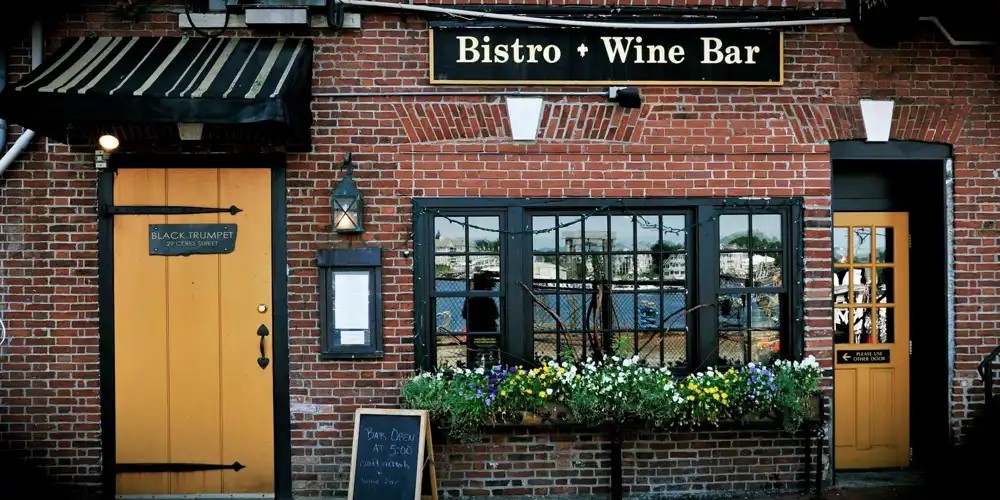
Black Trumpet — Portsmouth, New Hampshire
Portsmouth’s historic waterfront is one of the Northeast’s best small-city destinations, and Black Trumpet fits naturally into the city’s food scene.
Chef Evan Mallett’s restaurant emphasizes seasonal cooking, local ingredients and the diversity of New England’s food landscape. The menu changes with the seasons, with local seafood, meat, produce and other regional ingredients appearing throughout the year.
A recent menu, for example, featured chicken and lamb from Vernon Family Farm as well as local vegetables and Gulf of Maine fish.
The restaurant’s location in Portsmouth’s historic downtown makes it particularly easy to incorporate into a weekend getaway.
Why go: For seasonal New England cooking in a lively historic city.
The Farmhouse — Needham, Massachusetts
Farm-to-table dining doesn’t have to mean a special-occasion tasting menu.
The Farmhouse in Needham takes a more approachable approach, with a contemporary American menu built around local and organic ingredients. The restaurant’s menu changes according to what’s available from its farmers, and its owners have longstanding connections to farming and New England agriculture.
Current dishes include ingredients from local farms and producers, and the restaurant’s cozy, rustic interior reinforces its agricultural theme.
It’s a reminder that farm-to-table dining can work just as well in a suburban community as it does in the middle of the countryside.
Why go: For approachable farm-to-table cooking close to Boston.
Talula’s Table — Kennett Square, Pennsylvania
Kennett Square is famous for mushrooms, and Talula’s Table offers one of the region’s most distinctive dining experiences.
By day, the restaurant operates as a gourmet market. At night, it transforms into an intimate tasting-menu restaurant with just a handful of tables.
The experience is deliberately personal, with an eight-course tasting menu served around communal or smaller tables in the market itself. The restaurant emphasizes local, sustainable and organic practices whenever possible, with the menu changing according to what’s available.
Reservations are limited, making this less of a spontaneous stop and more of a destination worth planning a trip around.
Why go: For an intimate tasting-menu experience in one of Pennsylvania’s great agricultural communities.
Elements — Princeton, New Jersey
Farm-to-table dining in New Jersey might not immediately come to mind, but the Garden State has a substantial agricultural tradition—and restaurants like Elements are taking advantage of it.
The intimate Princeton restaurant combines modernist cooking techniques with ingredients sourced from local farmers and producers. The kitchen also incorporates foraging, fermentation and preservation into its cooking.
The result is more experimental than the rustic farm-to-table model often associated with the phrase. Ingredients from nearby farms become the foundation for highly creative dishes.
With only a small number of tables, Elements offers an intimate experience in the heart of downtown Princeton.
Why go: For an inventive, modern interpretation of local New Jersey ingredients.